
Stainless and sealed
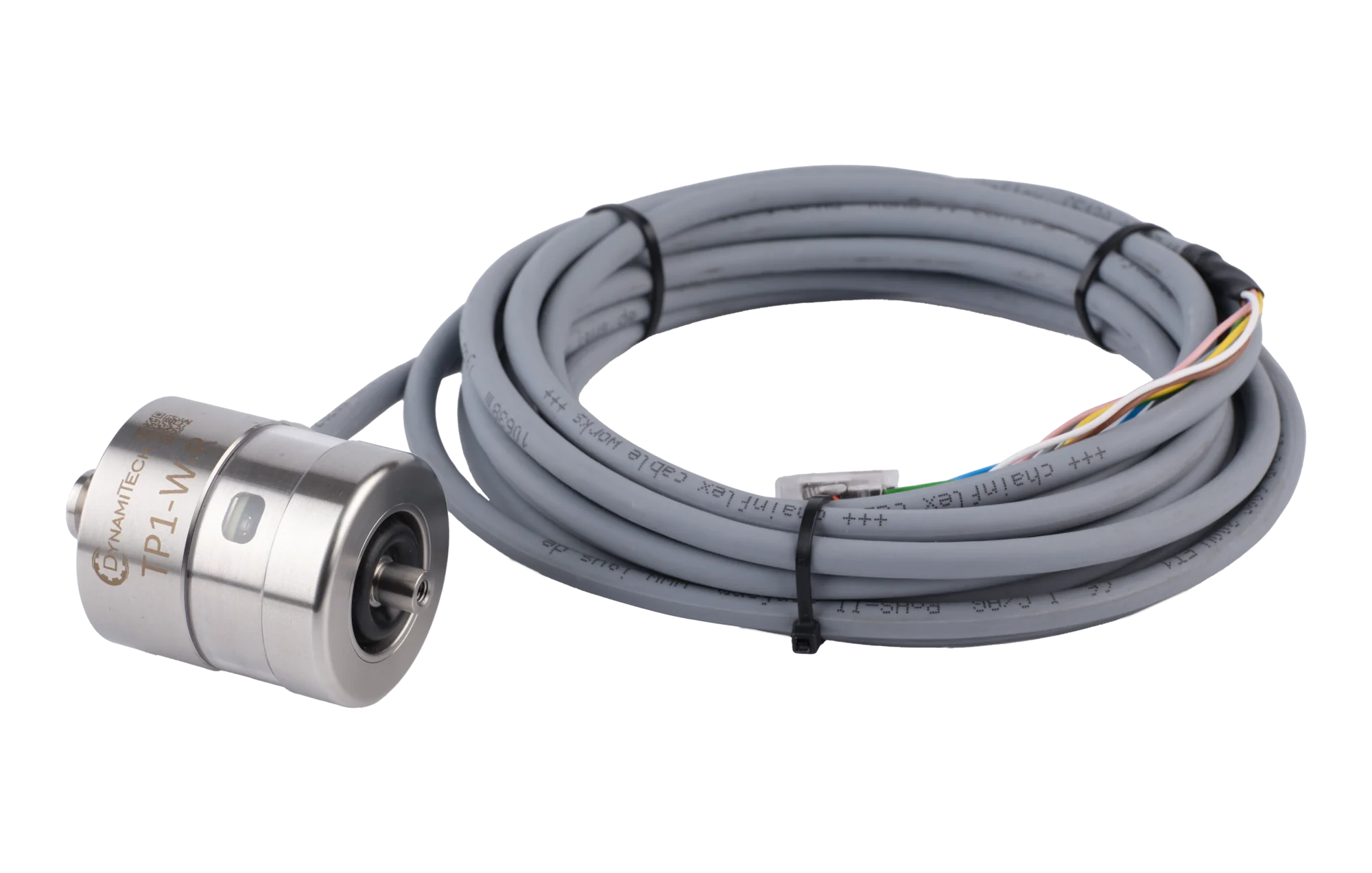
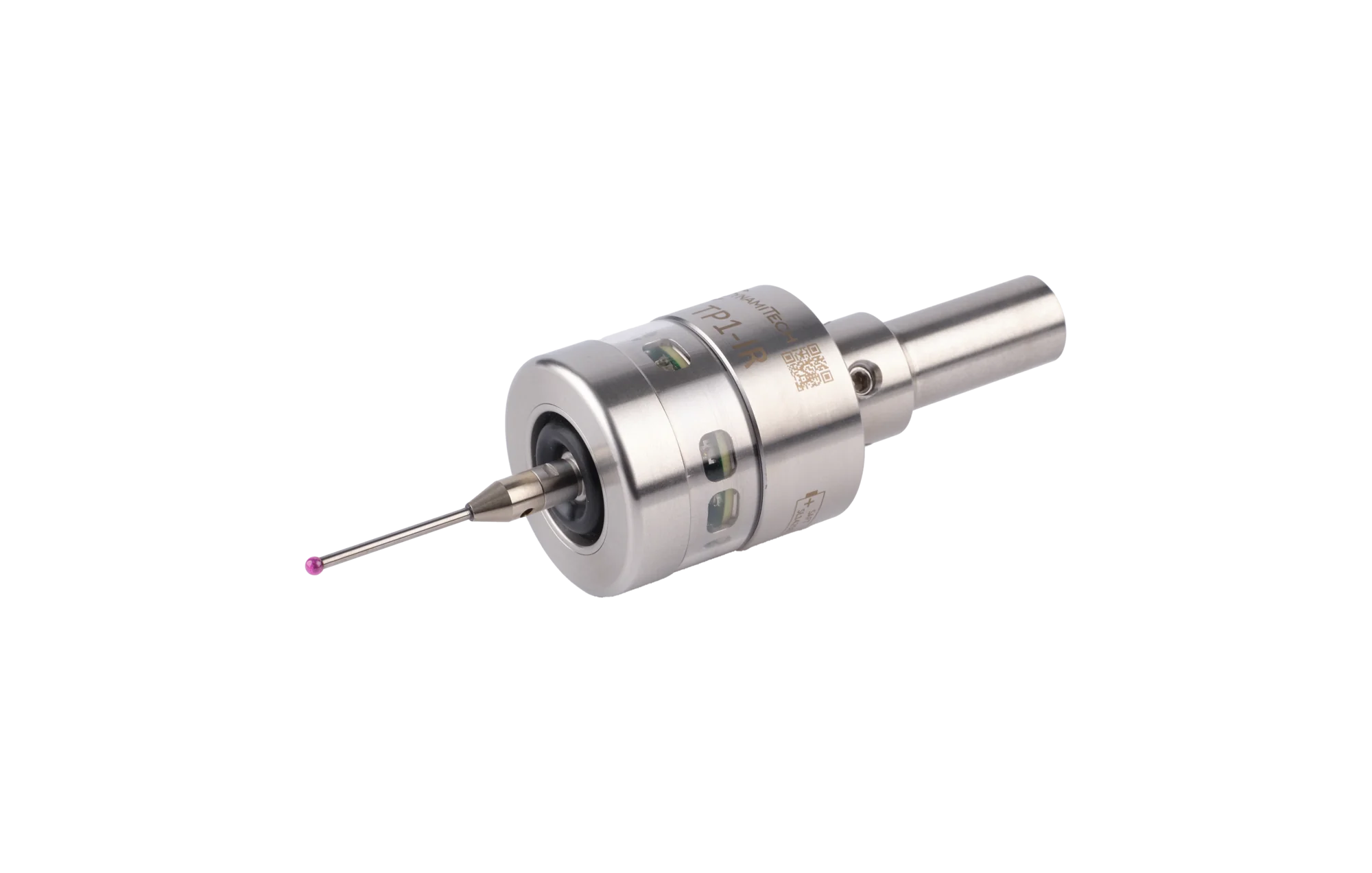
Stainless steel body, sealed to IP65 against coolant emulsion, oil and chips. Steel conduit available over the cable.
Probing at 2 m/min
Touch reports 2 ms behind the stylus. Long stylus included.
One switch, any control
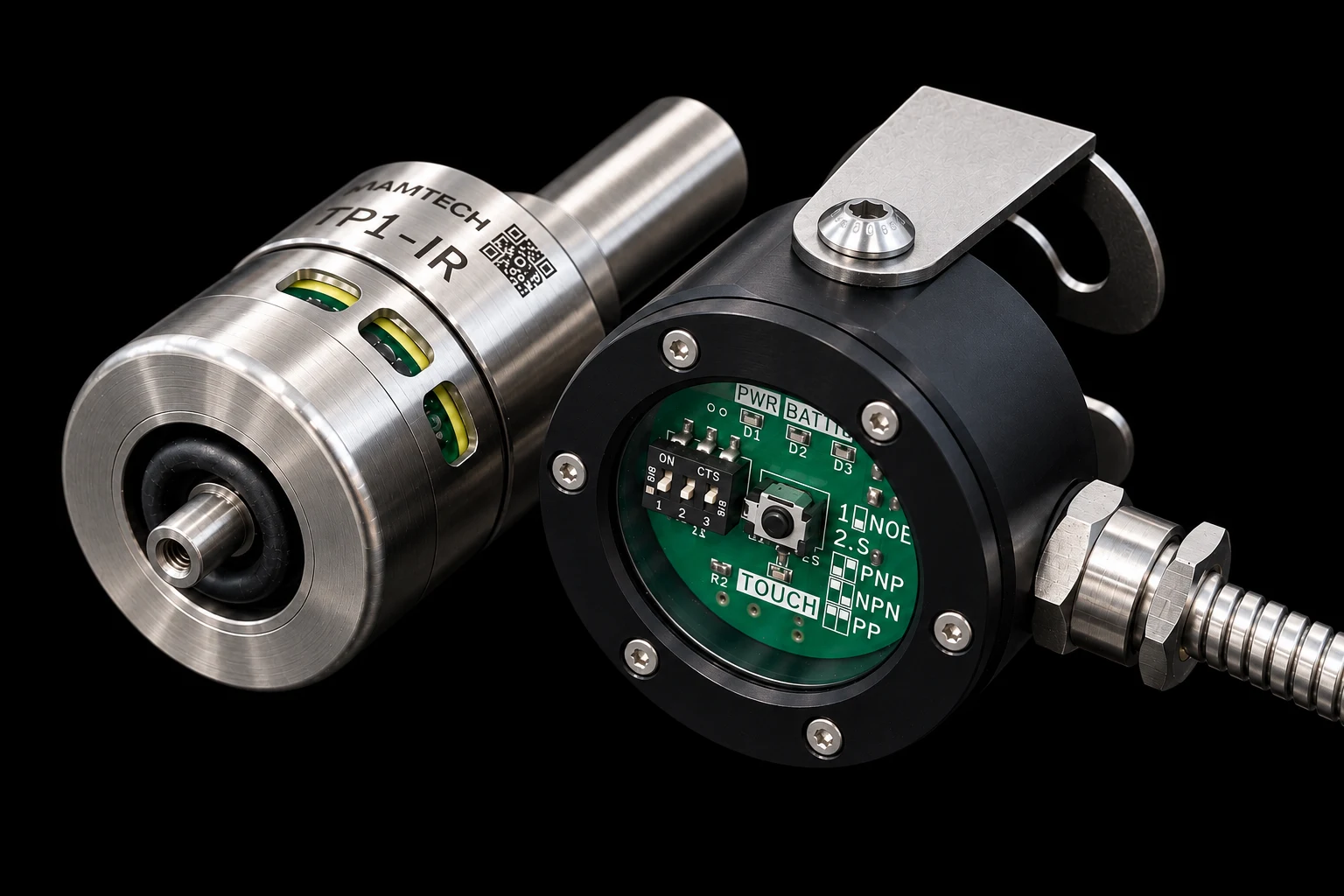
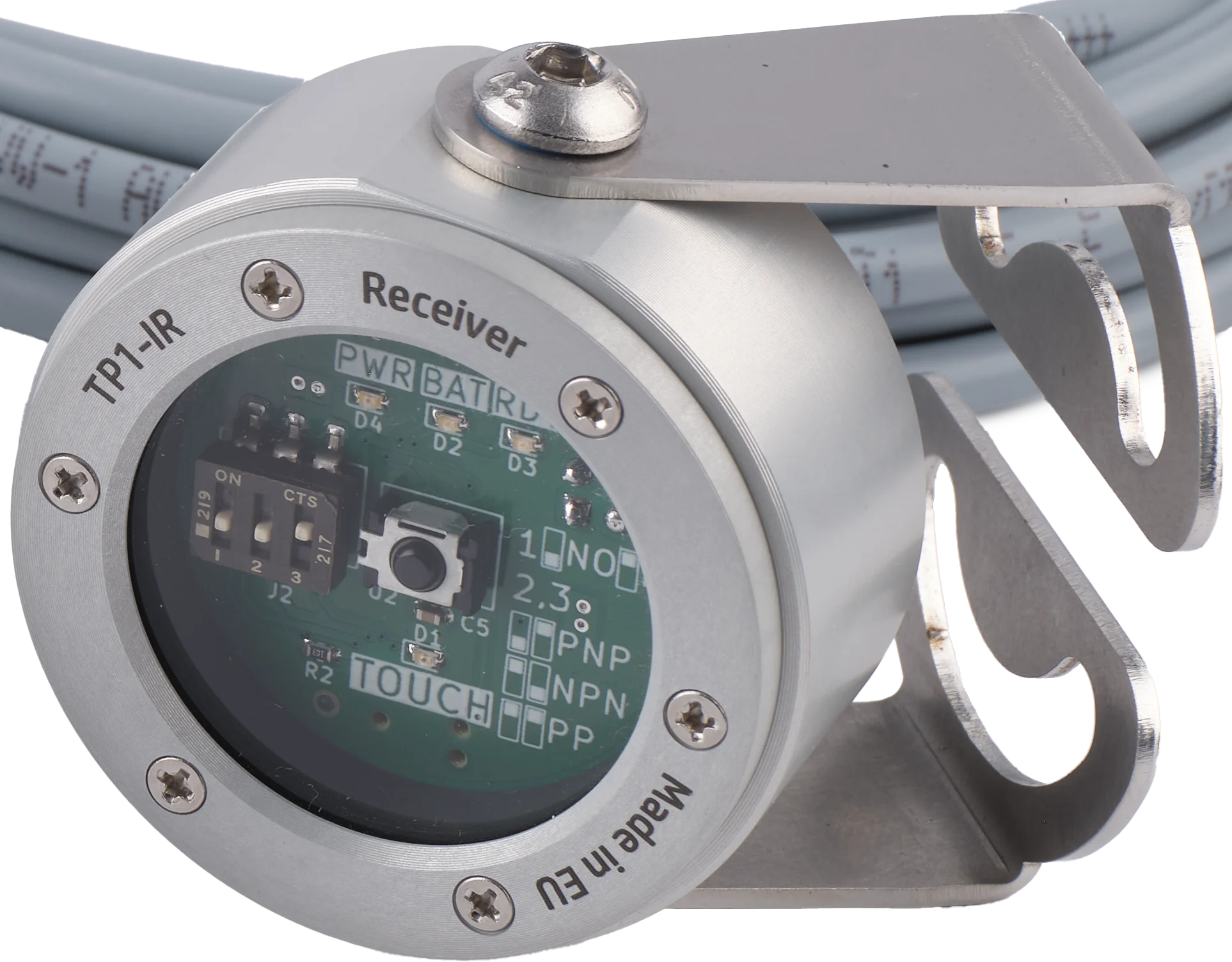
One switch sets the output. Siemens, Heidenhain, Fanuc, Haas, Mach3 and LinuxCNC all wire the same way.
Sealed against coolant and chips
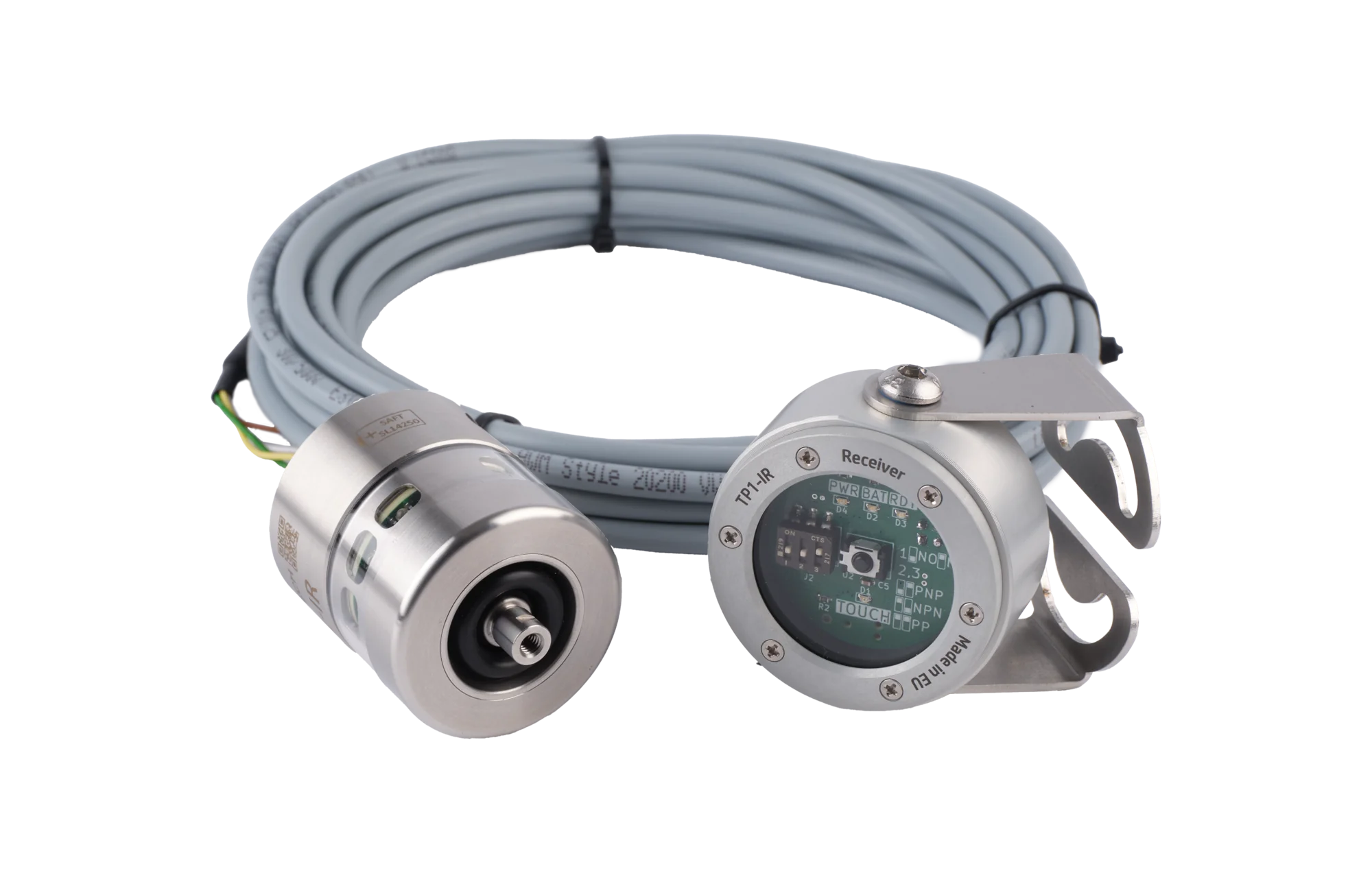
Stainless steel body, sealed to IP65. Coolant emulsion, cutting oil, swarf and shop dust stay outside. The seal keeps the kinematic seat clean, which is what holds repeatability over a shift. An optional steel conduit protects the cable to the receiver.
- Protection
- IP65
- Working temperature
- +10 to +40 °C
2 ms from stylus to control
Touch follows the stylus by 2 ms, or 3 ms on the first deflection while the probe leaves standby. Approach at rapid, probe at up to 2 m/min, take the next point without waiting for the signal to settle. A long stylus measures at the same rate as a short one.
- Probing speed
- 2 m/min
- Touch delay
- 2 ms
Wires to any control
One switch on the receiver board sets the output the way the control expects it: normally open or normally closed, PNP, NPN or push-pull. Touch and Ready leave on a 5 m cable at 5 to 24 VDC. Siemens, Heidenhain, Fanuc, Haas, Mitsubishi, Mach3 and LinuxCNC all connect from the same terminal block.
- Supply
- 5 – 24 VDC
- Cable
- 5 m
950 nm infrared, up to 5 m
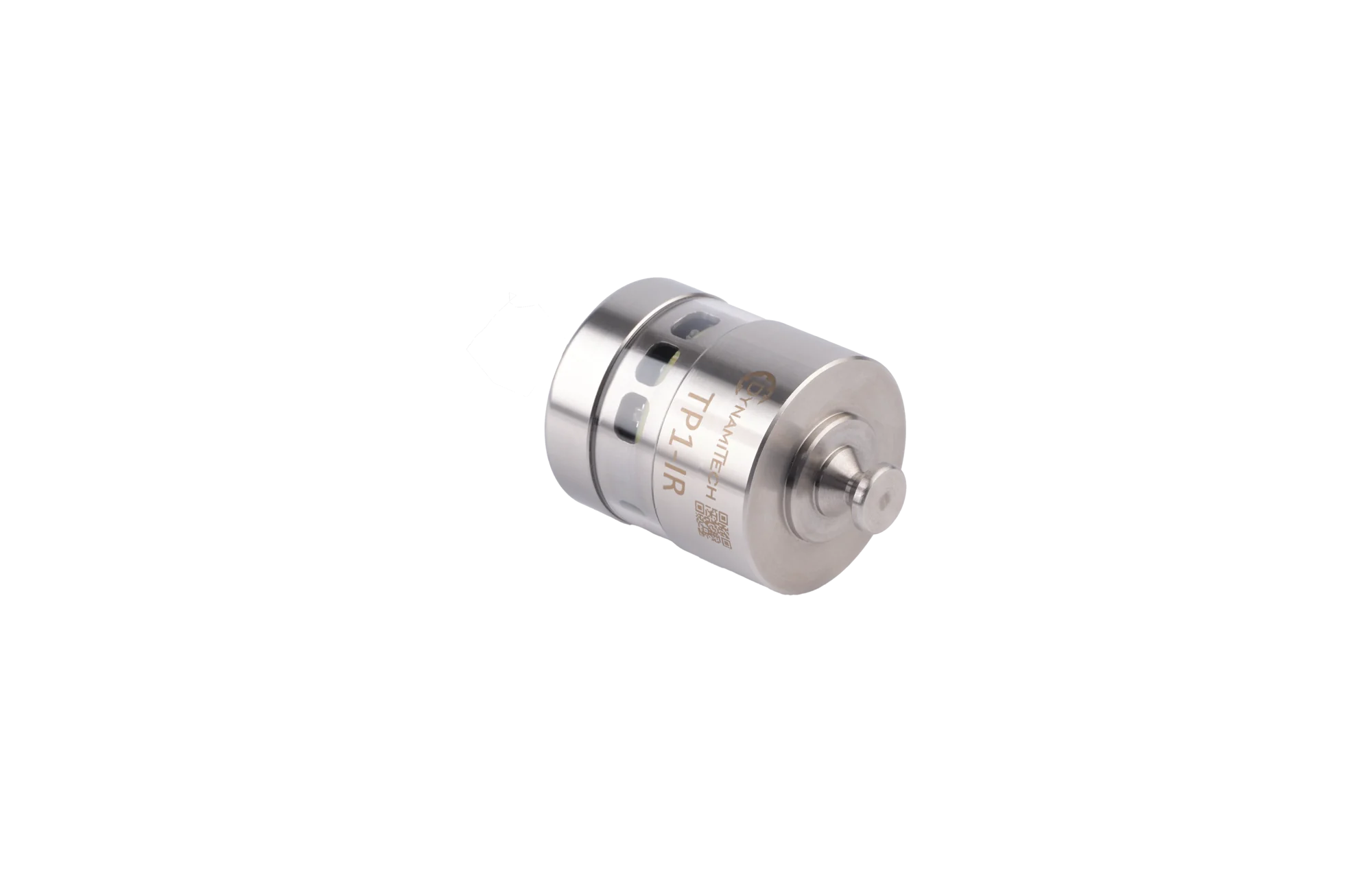
The probe transmits on 950 nm infrared and reaches the receiver at up to 5 m on direct line of sight. No cable down the spindle, nothing to snag in a tool change, nothing to replace when it is cut.
- Range
- 5 m
- Infrared
- 950 nm
800 days on one cell
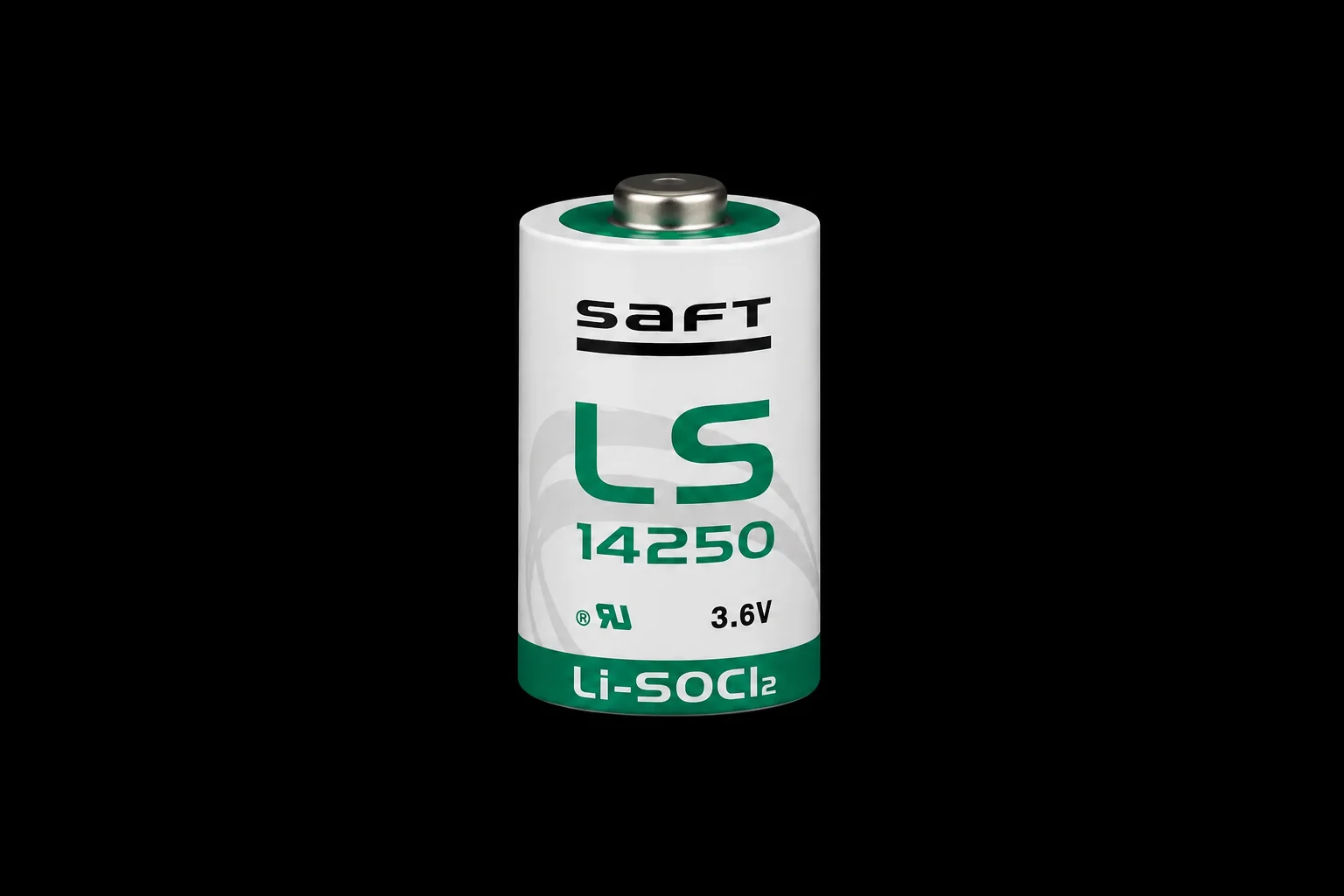
Deflecting the stylus wakes the probe. It transmits, then drops back to standby after the idle time set on it. One SAFT LS14250 runs about 800 days in standby and about 150 hours measuring.
- Standby
- ≈ 800 days
- Operating
- ≈ 150 h
Stylus, Touch, Ready
Output signal timing
Output set on one switch
The output is two settings: resting state and drive type. Both are made on a single switch on the receiver, with the legend printed beside it. No control-specific variant to order, nothing to solder, nothing that has to be right before the probe ships.
- Signal state
- NO · NC
- Signal type
- PNP · NPN · Push-Pull
Set on the switch on the receiver’s board, where the legend is printed too.
Two parameters, no software
P1 matches the infrared duty cycle to the working distance. P2 sets how long the probe stays awake before it sleeps. Both are entered by touching the stylus and read back by the LED on the probe. No software, no cable, nothing to connect.
- P1 · Duty cycle of the IR LED
- 10 % – 50 %
- P2 · Transition to standby
- 1 min – 20 min
Specifications
- Repeatability
- 0.005 mm
- Range
- 5 m
- Protection
- IP65
- Directions
- ±X, ±Y, -Z
Order the TP1-IR
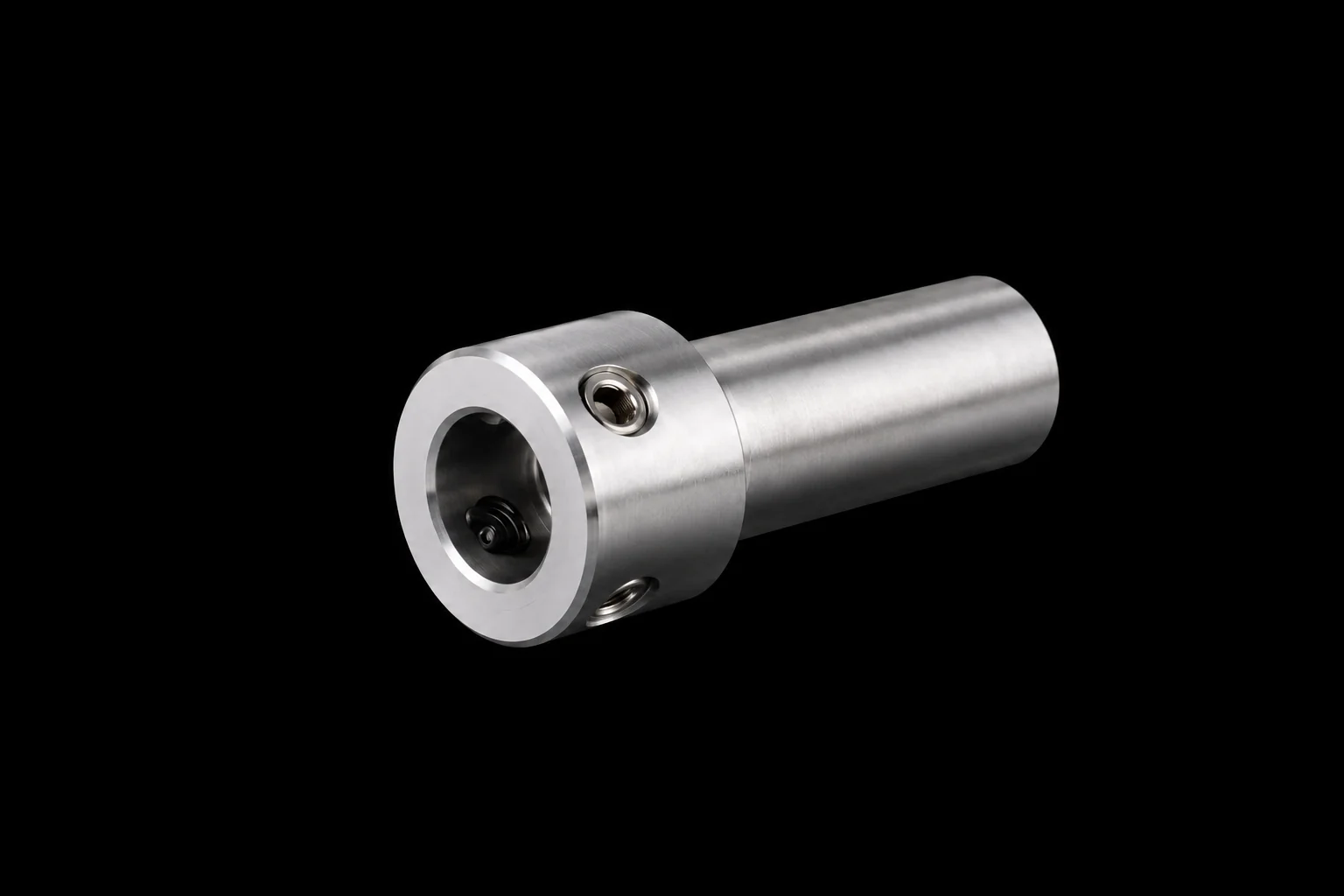
The TP1-IR ships as a probe. An M4 stylus, the CS16 clamping shank and the BP58 base plate are ordered alongside it. Ordered together, the assembly arrives centred and ready for the machine.